
O'Fallon Previous Resident Sources
O'Fallon address history reaches across records kept in Belleville, local library collections, and state archives. No source provides a complete list of past residents. The best starting point depends on the period: current parcel data points to a deed, a printed directory may name a person at a street address, and a census can describe a household. Dates below are verified local coverage, not guesses about a portal's full reach.
| Source | Years It Covers | Where Held | What It Shows |
|---|---|---|---|
| Recorder family records | Late 1790s onward, series varies | St. Clair County Recorder | Deeds, mortgages, liens, plats, and indexed parties |
| Recorder online images | Most documents from January 1986 forward | Landrecords.net, Laredo, or office | Instrument images; exact completeness was not published |
| O'Fallon Progress | 1898 onward, with documented gaps | O'Fallon Public Library and Historical Society | Names, notices, obituaries, businesses, and address clues |
| O'Fallon city directory | 1929 edition verified | O'Fallon Historical Society | Spouse, occupation, address, and householder or resides notation |
| Federal census | 1900 through 1950 publicly available | NARA and library databases | Household members, relationships, ages, birthplace, and location |
| Sanborn map | June 1921, nine sheets | Library of Congress | Buildings, uses, street context, and fire-insurance details |
For a recent transfer, start with wEdge and the deed index. For a household present around 1929, move first to the directory, Progress, census, and Sanborn sheets. The 1999 library survey listed Belleville Polk directories from 1974 onward, but the present shelf run and reverse-directory coverage were not verified. Ask the reference desk before planning a visit around those volumes.
Fix the O'Fallon Address First
Write down the house number, directional, street name, suffix, city, and ZIP exactly as they appear now. Search variants such as O'Fallon, O Fallon, and OFallon when an old index or newspaper OCR does not cooperate. In wEdge, Address Search accepts a low and high house number, street name, and city. Save the 11-digit parcel number and legal description from the correct parcel before moving into deed research.
A tax-bill mailing address is not the same as the situs address, which is the physical location of the parcel. A former owner may receive mail elsewhere. Likewise, no specific O'Fallon street-renumbering project was found in the official sources. When the number fails, compare the legal description, plat, parcel history, old street spelling, and nearby intersections instead of inventing a renumbering date.
Trace O'Fallon Past Owners
The St. Clair County Recorder indexes land instruments by party, parcel, date, document number, and document type. AVA is free but index-only. Images and broader modes are available through paid remote systems or at seven free public search workstations in the Recorder's Belleville office. That access split matters: the absence of a free online image does not mean the deed is unavailable.
- Use wEdge to identify the present owner, parcel number, situs address, and legal description.
- Search that owner as grantee, the buyer, in AVA. Add the parcel number and a date range, then identify the purchase deed.
- Read the deed for its grantor, the seller, plus the legal description, prior instrument reference, and recording details.
- Search that seller as an earlier grantee. Keep the lot, block, or metes-and-bounds description aligned when one party transferred several parcels.
- Repeat until the online image trail ends or the legal description changes. Then use office books, indexes, microfilm, IRAD, and local reference help.
- Grantor and grantee
- The grantor transfers an interest; the grantee receives it.
- Chain of title
- The linked sequence of recorded transfers for the same land.
- Legal description
- The lot, block, subdivision, or boundary wording that identifies land even when its street address changes.
- Criss-cross directory
- A directory arranged by address or phone number instead of only by surname.
Recorder records extend to the late 1790s, while the county says most online images begin with documents recorded in January 1986. The exact AVA index start date was not published. Do not flatten those facts into one online coverage date. Also, recording is a ministerial act. It does not by itself prove a document is valid or settle a title dispute.
See the O'Fallon Deed Index
The historical land-record route linked by St. Clair County shows the remote starting point for recorded-document searches and images.

The screen is a gateway, not proof that every old O'Fallon instrument has a digital image. Preserve the document number, book and page, parcel, and party names so the Recorder can locate an office copy when remote access stops.
Map O'Fallon Previous Residents
The June 1921 Sanborn set contains nine O'Fallon sheets. It can show whether a site held a dwelling, store, school, railroad-related structure, or another mapped use. The 1863 St. Clair County map adds an O'Fallon inset with landowners, business notices, and building views. Neither source identifies every occupant, but both can test whether a modern parcel and an older address describe the same place.
City building and occupancy reports add newer dated evidence. A permit may establish when work occurred, not who continuously lived there or when title passed. Pair a permit date with the assessor's first assessment containing a house, the deed chain, directories, and newspaper notices. If a subdivision split or common tract interrupts the chain, Mapping & Platting and recorded plats are the bridge.
Rebuild O'Fallon Past Households
Owners are only half of an address history. The verified 1929 O'Fallon directory prints names, spouses in parentheses, occupations or businesses, street addresses, and terms such as householder or resides. Those are historical directory labels, not present-day legal findings. Repeated names may refer to different people, so compare spouse, work, and address before deciding that two entries describe one person. The underlying collections are described more fully in the O'Fallon city directory.
Take one dated directory entry and compare nearby Progress issues, then find the matching public census year. The newest public federal census is 1950 under the 72-year rule. O'Fallon may be indexed as a city, township, or precinct, so confirm the enumeration district and map boundary. A census household can include people who never held title, while a deed may name a party who never occupied the house.
- Copy the directory name, spouse, occupation, address, and exact source year.
- Search the same and adjacent Progress years for spelling variants, notices, marriages, and deaths.
- Locate the household in the nearest public census, using its period geography rather than today's city limit.
- Compare the deed and census separately, noting which facts concern ownership and which concern residence.
Bridge O'Fallon Archive Gaps
The O'Fallon Progress trail has real gaps. The library's visible scans begin in 1898, but 1900 and 1918 through 1919 are unavailable in the stated run. Historical Society files also reflect water damage after a fire. Missing pages do not prove that a person or event was absent.
Use library microfilm, copies at Belleville Public Library or the Abraham Lincoln Presidential Library, a census, deeds, church records, cemetery files, and regional newspapers to bridge a missing year. The Historical Society's obituary and marriage index covers February 1898 through December 2007, but spelling and transcription errors are possible. Record the date clue, then verify it against the original notice or an official vital record.
Verify O'Fallon Genealogy Records
The St. Clair County Clerk genealogy indexes explain the county route for older births, deaths, and marriages.
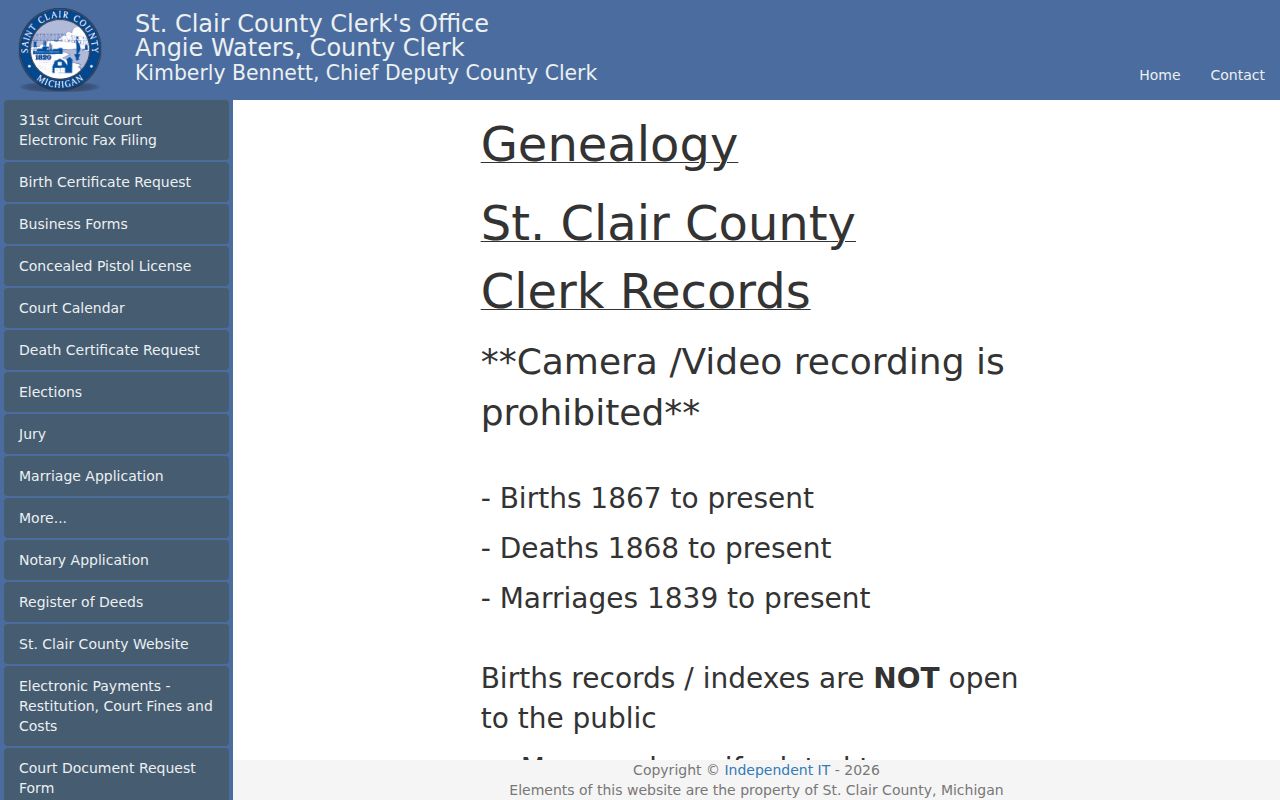
The legacy genealogy page states different historical ranges from the current county vital-record page. Keep each statement attached to its source and ask the custodian which series applies. Do not merge the dates into a single claim.
The Illinois genealogy access page adds statewide rules for older vital records.
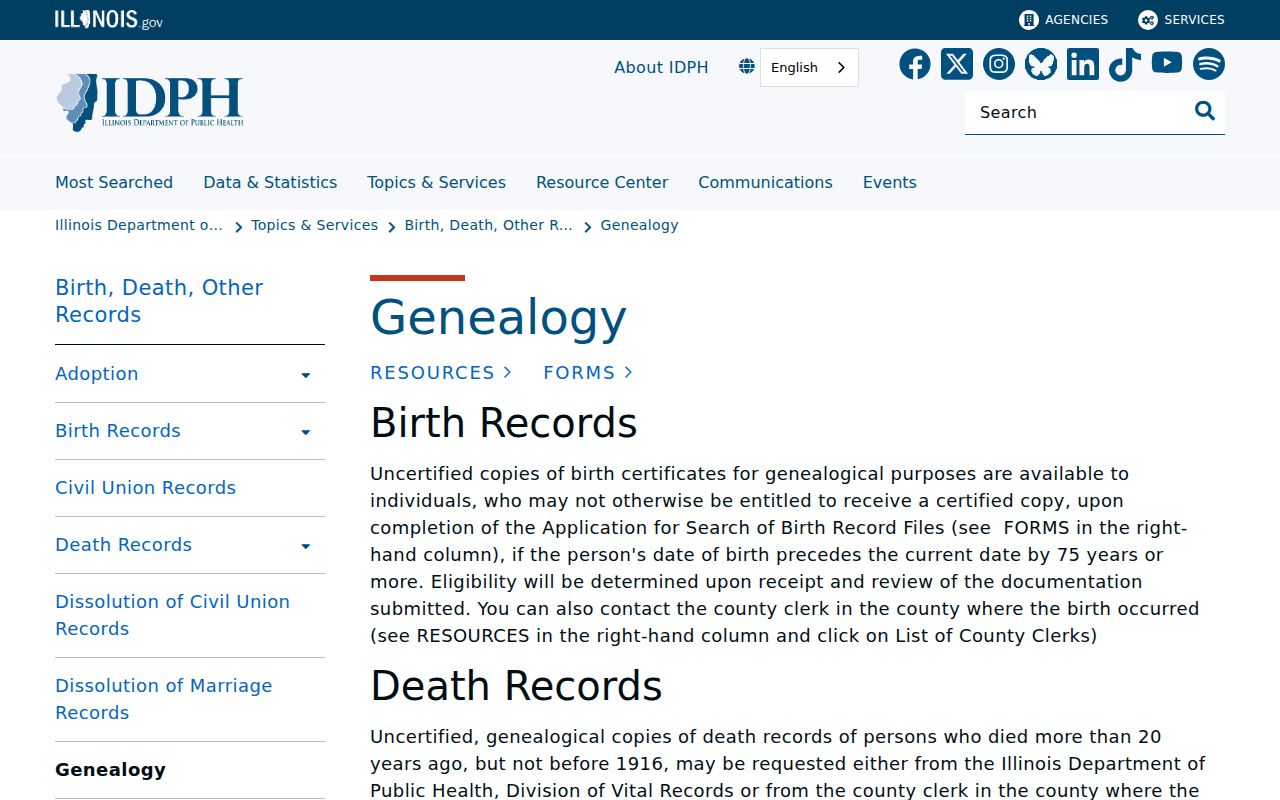
Genealogical copies and certified current-use copies are different products. State rules open genealogical birth copies at 75 years and death copies after 20 years, with pre-1916 deaths routed to the county clerk or IRAD.
Close an O'Fallon Resident Trail
Obituaries, cemetery interment and lot records, probate files, and later deeds often explain why a name disappears from an address. The O'Fallon Historical Society oversees Rock Spring Cemetery and provides local newspaper and directory help. The County Clerk and state health department apply record-specific access rules, so an index clue may be open even when a certified record is limited.
Use a death date and relative's name to locate an obituary or probate matter, then return to the deed chain for an heir's conveyance. This sequence can show how title changed after death without assuming that every heir lived at the property. It also gives previous residents a documented endpoint rather than an unsupported move date.
Lawful use. Research O'Fallon previous residents for house history, family history, or personal curiosity. Never use a record to track, threaten, or harass a living person.