
O'Fallon City Directory Holdings
O'Fallon's historical shelf is broader than printed city directories alone. The one inspected directory sample comes from Polk's 1929 Belleville volume and is preserved through the O'Fallon Historical Society. The Public Library provides the strongest online and microfilm newspaper run. A 1999 state library guide also described Belleville Polk directories from 1974 forward, but that statement is a past shelf snapshot and must be checked with the reference desk before a visit.
| Collection | Years | Where Held | Access |
|---|---|---|---|
| Polk O'Fallon entries | 1929 edition | O'Fallon Historical Society | Museum original; newsletter samples online |
| Belleville Polk directories | 1974-current in a 1999 snapshot | O'Fallon Public Library | Ask staff to verify present shelf |
| O'Fallon Progress scans | 1898 onward with gaps | O'Fallon Public Library | Online scans; microfilm fallback |
| Obituary and marriage index | February 1898 to December 2007 | Historical Society | Four alphabetic PDFs; request copies |
| Sanborn maps | June 1921, nine sheets | Library of Congress | Free online maps |
| IRAD county series | 1790s onward, series-specific | Illinois State Archives | Finding aids and reference requests |
No verified complete O'Fallon reverse-directory year run was published in the sources. That gap matters. Call the library before promising a particular volume, and ask the Historical Society about the 1929 original. For newspapers, use the published scan list year by year rather than describing one continuous digital run.
Access changes by format. A free web index may reveal a name and date but not the page image. Library databases may require an O'Fallon card or an in-building computer. Fragile museum originals may be handled through a staff request, while microfilm can sit at another repository. Before traveling, give the desk a surname, rough year, known address, and collection name. Ask whether the item is on a shelf, on film, online, or available only by copy request. That prevents an index citation from being mistaken for the original city directory page.
O'Fallon Library Genealogy Shelf
The O'Fallon Public Library database page is the practical gateway to Ancestry Library Edition in the building, FamilySearch, Progress resources, obituary and marriage indexing, and broader historical databases. Its local history strength is newspapers and linked research tools rather than a proven long, current shelf list of printed O'Fallon city directories.
The database gateway is shown in the library capture.
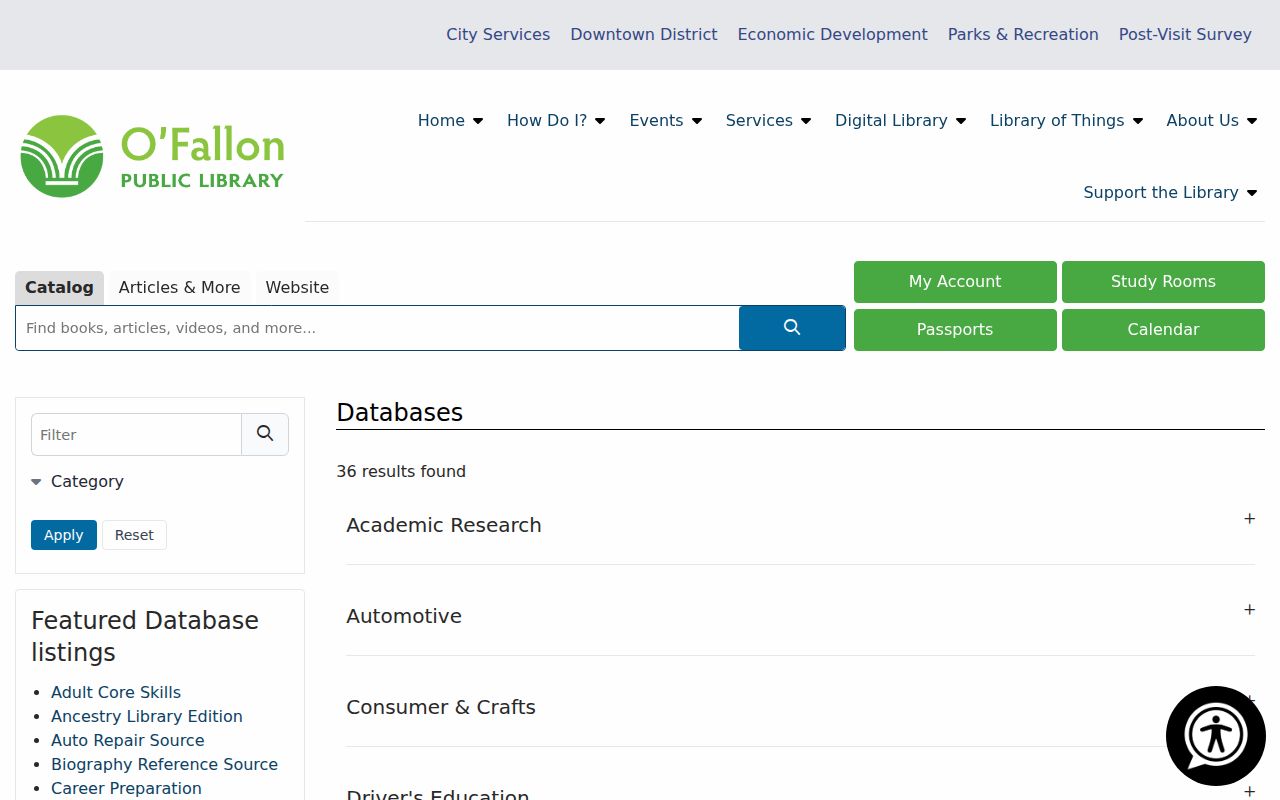
The image helps distinguish open links from licensed resources that may require a library computer or card.
The library history traces an institution opened in 1930 through several addresses before its current Civic Plaza home.
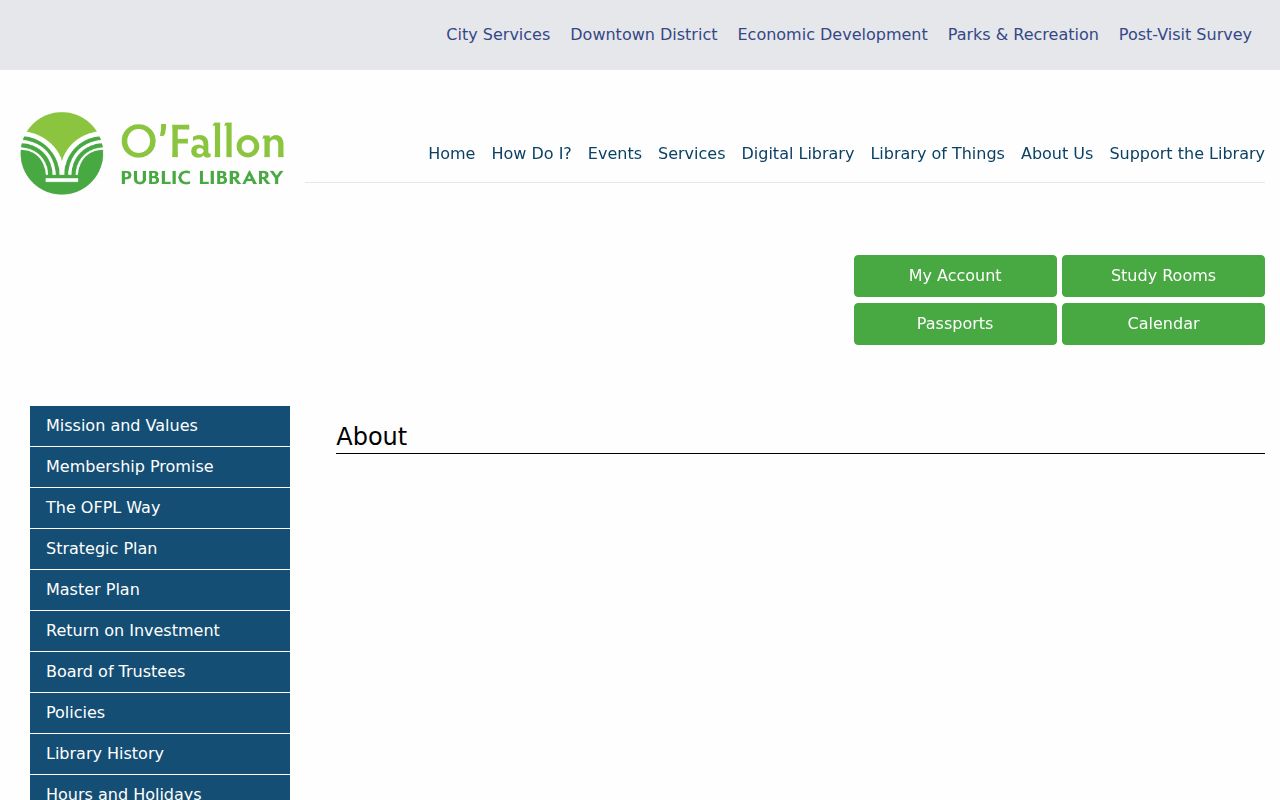
Those moves may help explain why local material is split among shelves, microfilm, databases, and digitized collections. Call 618-632-3783 for current holdings and access conditions.
O'Fallon Progress Directory Clues
The O'Fallon Progress began in 1895. The library's scanned archive lists 1898, 1901 through 1917, and 1920 through 1929 in the inspected early run. It expressly lacks 1900 and 1918 through 1919. Search the archive year by year, then use microfilm or duplicate repositories when a scan year is absent.
The digitized-year route appears in this archive capture.
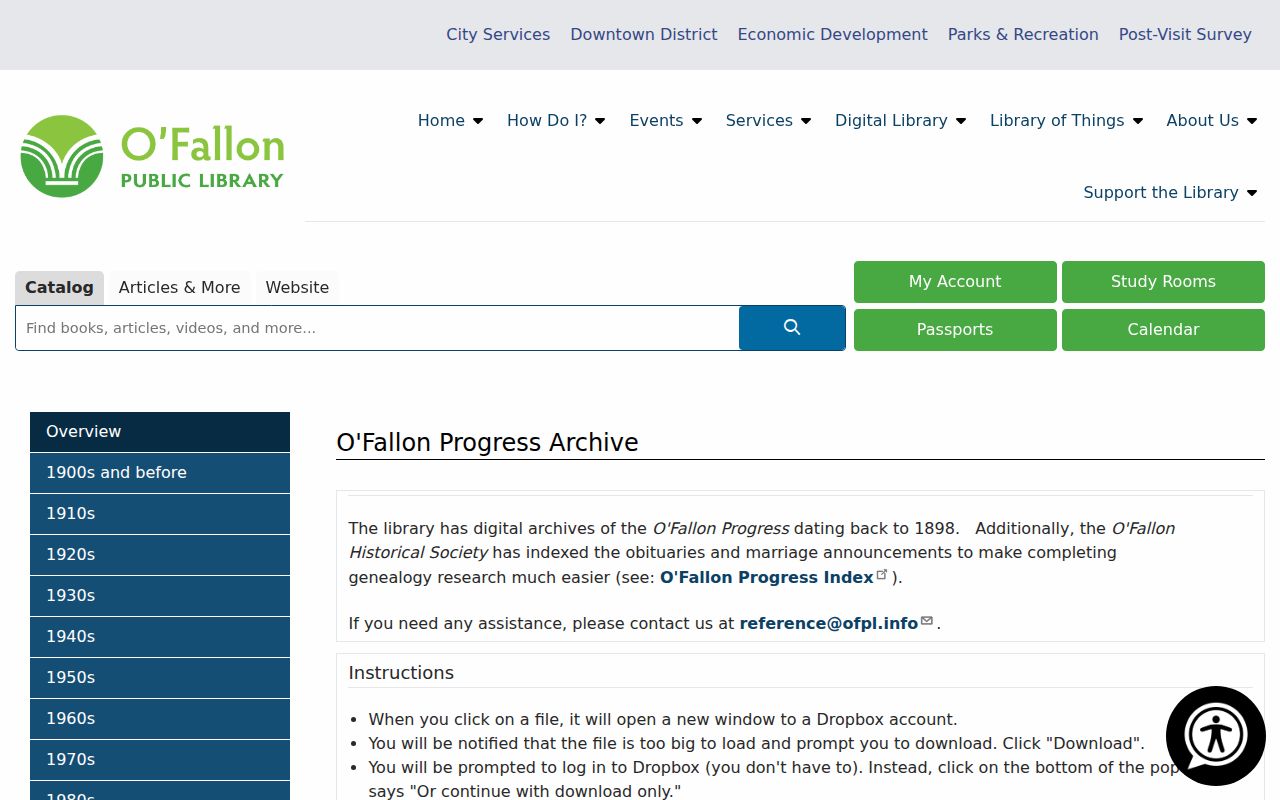
The year links create a dated bridge around a city directory entry, but a missing link is not proof that a person or event was absent.
Historical Society files have documented gaps attributed to water damage after a fire. Fragile originals are backed by library microfilm and copies at Belleville Public Library and the Abraham Lincoln Presidential Library. This is a record-history fact, not a county courthouse fire or the loss of all records for those years.
O'Fallon's 27,965 Name Index
The Historical Society's Progress index reported 27,965 obituary and marriage-announcement entries from February 1898 through December 2007. Four alphabetic PDFs provide names and date clues. The Society warns that original spellings, transcription errors, digitization errors, and omissions may appear. It accepts corrections and limits requests to five, with a possible small copy fee.
The index and request route are visible in the captured page.
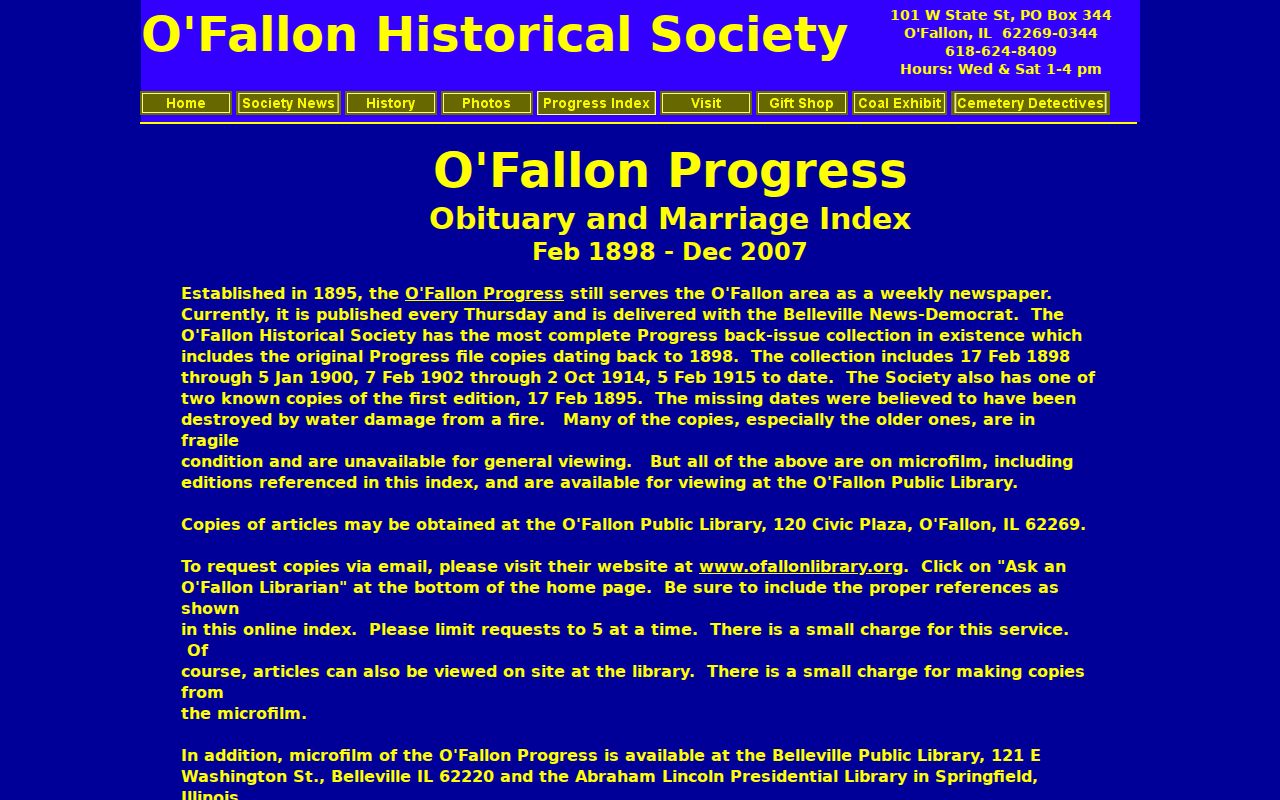
An index hit is not a certified vital record. Use it to find a notice date, then confirm facts with the newspaper image, cemetery record, County Clerk, or state custodian.
Decode an O'Fallon Directory Entry
The inspected 1929 entries place a spouse in parentheses, then may give an occupation or business, a household marker, and an exact address. Widow status sometimes appears. The Historical Society newsletter corrected one transcription from “renter” to “resides,” a useful warning that an indexed word should be checked against the original if its meaning matters.
| Identity | Surname, given name, middle initial, and spouse in parentheses where printed |
|---|---|
| Work | Occupation, trade, employer, restaurant, store, or other business |
| Household mark | The directory's own “householder” or “resides” wording |
| Address | House number, directional letter, and street name |
| Status note | Widow notation or residence with another named person |
- Criss-cross directory
- An address-first index arranged by street and house number.
- Householder index
- A list centered on the person identified as head or principal occupant by the publisher.
- Abbreviation key
- The publisher's guide to shortened street, work, status, and residence terms.
Repeated names may describe different people. Compare spouse, occupation, business, and address before joining two entries. Preserve the old label as printed, but do not convert it into a present-day legal or family conclusion.
Place O'Fallon Directory Addresses
The 1921 O'Fallon Sanborn set has nine sheets that supply building and street context close to the 1929 directory year. An 1863 St. Clair County map adds an O'Fallon inset with landowners, businesses, and building views. These maps help when an address has changed or when a directory lists an old directional form.
County GIS, plats, and legal descriptions are the modern bridge. No official local street-renumbering year was located, so do not assign one. Compare the printed address, mapped building, parcel, and deed. The same place may also appear as city, township, precinct, or postal geography in another record.
Trace O'Fallon Families by Directory
An O'Fallon city directory entry is strongest when paired with records from the same period. Begin with all printed identity fields, not just the surname. Search nearby newspaper years and the local index, then match census geography carefully. O'Fallon can appear under city, township, precinct, or ward labels that do not match modern boundaries.
- Record the name, spouse, work, household term, number, street, and edition year.
- Search nearby Progress years for spelling variants, marriages, deaths, businesses, and moves.
- Follow the person across available editions. Use an address-first index when the volume has one.
- Pair the trail with public federal censuses from 1900 through 1950 and map the enumeration area.
- Test departures with deeds, cemetery records, probate, obituary notices, and regional newspapers.
Disappearance does not have one meaning. The person may have moved, died, changed names, been omitted, or fallen into a missing edition. A deed can date a property transfer; an obituary or cemetery entry can document death; a later directory or census can show a move. If the goal becomes current ownership by address, use the O'Fallon street directory method instead of stretching an old volume beyond its date.
O'Fallon's Record Shelf Over Time
O'Fallon's institutions explain why records sit in different places. County offices preserve the earliest land and court material. Municipal status created a city-record layer. Scott Field added military context, while the library and Progress created strong local history routes.
| 1790 | St. Clair County organized, with older county series now routed through county offices and IRAD. |
|---|---|
| 1874 / 1905 | O'Fallon incorporated first as a village, then as a city. |
| 1895 | O'Fallon Progress began publication. |
| 1917 | Scott Field began, adding a major local institutional trail. |
| 1929 | The inspected Polk directory edition recorded O'Fallon names and addresses. |
| 1930 | O'Fallon Public Library opened and later became a local-history gateway. |
For older county material, use the IRAD St. Clair County guide and record the series identifier before requesting a copy. An index and its original may be held by different repositories.