
O'Fallon Neighbors by Source
The public record can describe the land, ownership, district lines, recorded instruments, and some dated civic or historical activity around an O'Fallon address. It cannot supply a complete current roster of the block. Match each question to its source and carry the date of every result.
| Source | What It Shows About a Block | Access |
|---|---|---|
| County GIS parcel layer | Parcel shapes, address points, streets, districts, and adjacent geometry | Public viewer; exact popup and selection controls were not captured |
| wEdge property roll | Owner, parcel, assessment, situs, and tax-mail clues | Free address or parcel search; result fields require verification |
| Recorder AVA | Recorded parties and instruments tied to nearby parcels | Free index; images paid or viewed at office workstations |
| Election geography | Precinct and polling-place context | Public maps; no arbitrary block list of voter names |
| Directories and Progress | Historical occupants and notices at dated addresses | Library and Historical Society; incomplete years and transcription limits |
| Civic groups | Public meetings, board names, events, and contacts | No authoritative neighborhood or HOA member directory was located |
An assessor record supports a claim about tax-roll ownership, not a claim about every occupant. A tax mailing address may point elsewhere. A registered voter need not own the parcel, and the public voter lookup requires a known person plus personal identifiers. Keep these limits visible when comparing block records.
Pin Down an O'Fallon Parcel
Start with the physical, or situs, address. In wEdge, Address Search accepts a house-number range, street name, and city. Basic Search accepts an 11-digit parcel number or owner name. Save the parcel number before copying a name because a map popup may be stale, a tax bill may use another mailing address, and one apparent lot can include a split or common area.
The county GIS data include parcel geometry, address points, street centerlines, incorporated places, townships, precincts, and county board districts. The viewer loaded during research, but its exact popup buttons, buffer tool, layer controls, and export behavior were not text-visible. Use the official layer inventory as a map checklist, then visually confirm the current interface.
Map the O'Fallon Block
A block search should move from one verified polygon to the parcels around it. Corners, alleys, road rights-of-way, drainage ground, and subdivision common areas can make a property look adjacent when it is not another home. The parcel ID and legal description are safer bridges than a name alone.
- Locate the starting address in the St. Clair County GIS viewer or wEdge, then turn on parcel boundaries and address points.
- Orient the map with street centerlines. Note immediate polygons, corner parcels, and lots across the street.
- Record each parcel ID and search it in wEdge. Compare the situs and tax-mailing addresses without treating an exemption as proof of residence.
- Use AVA for recorded instruments and deeds. If a common area or split appears, consult the plat and legal description.
- Check the incorporated-place layer before calling every nearby parcel part of O'Fallon.
This method stays within the immediate radius. For a full named road and its broader address chain, use the O'Fallon street directory.
Official O'Fallon Block Records
Official rolls and commercial neighbor tools answer different questions. A county source identifies the record custodian, the record date, and the parcel or instrument key. A commercial compilation may merge names and addresses from many sources without showing when each link was true.
| Route | Useful Strength | Key Limit |
|---|---|---|
| County GIS and assessor | Parcel-based geography and current tax-roll ownership | Owner is not a complete household list |
| Recorder index | Dated instruments and title parties | Recording alone does not prove legal validity |
| Official voter lookup | Confirms a known person's registration | Requires identifiers and does not browse a block |
| Commercial compilation | May group address clues quickly | Source dates, merges, and corrections may be unclear |
Confirm any commercial clue at the official custodian. A private opt-out can remove a commercial profile but cannot erase a valid deed, parcel, newspaper, or other source record.
O'Fallon Precinct Lookup Limits
The GIS precinct and county-board layers show political geography around a block. They do not name each voter. Illinois's public registration lookup asks for first and last name, birth date, five-digit ZIP, then street number and street name after ZIP selection. It confirms a known person rather than producing a block list.
Separate voter registration from property ownership. Illinois Election Code rules restrict and redact released list fields, including street numbers, full birth dates, phone numbers, Social Security numbers, identifiable email addresses, and protected data. Address Confidentiality Program participants also receive statutory protection. District boundaries may be mapped, but those safeguards prevent the map from becoming a complete household roll.
O'Fallon Civic Neighbor Contacts
No authoritative city or county directory of O'Fallon neighborhood associations, HOA members, congregations, or block-watch rosters was found. Do not invent group names from subdivision labels. Public civic sources can still identify organizations and contact routes without exposing private membership.
City Boards and Committees
Meeting agendas and minutes may list appointed members and public business. They are civic records, not a block roster.
Downtown District
The city links to a district and community route, but a neighborhood membership directory was not located.
O'Fallon Public Library
Board materials, programs, calendars, newspapers, and local-history tools provide public community context.
Historical Societies
O'Fallon and St. Clair County groups hold contacts, finding aids, photographs, newsletters, and dated organization records.
Ask a group directly about any member list and respect its access rules. A congregation, club, or neighborhood organization may keep private rosters even when its officers, meetings, and public events are easy to find.
Request O'Fallon Block Records
When a city or county address record is not posted, a focused Illinois Freedom of Information Act request can ask for an existing permit, report, map, or other disclosable document. Use the address, parcel number, date range, and record type. Do not ask an office to create a new list or assume FOIA overrides privacy laws.
The St. Clair County request portal supplies the county's online intake route.
A narrow parcel-based request is easier for the custodian to route and review than a demand for all people on a block.
O'Fallon Block Safety Records
Police reports and cemetery records can add dated civic context, but neither should be used as a current resident list. The O'Fallon Police records information identifies the local route for requesting records that may be released.
Access depends on the record and applicable redactions. A report tied to an address documents an event, not every person who lives nearby.
The county's Property Fraud Alert enrollment page offers notice when a document is recorded under an enrolled name.
The alert does not lock title, prevent a forged filing, or prove that a recorded document is valid. It is a notice tool for an owner, not a neighbor search.
Historic O'Fallon Block Records
For an older block, the 1929 O'Fallon directory and the O'Fallon Progress can provide dated address snapshots. Directory entries include a spouse, occupation or business, street address, and historical labels such as householder or resides. Repeated names at different addresses require a spouse, work, and address cross-check.
Cemetery records can connect a former resident to a death date, family link, or burial lot. The O'Fallon Cemetery information page identifies the municipal cemetery route.
The cemetery record can extend a dated household trail, but it does not establish continuous residence at the former address.
The city's Cemetery Authority responsibilities describe how cemetery information and duties are organized.
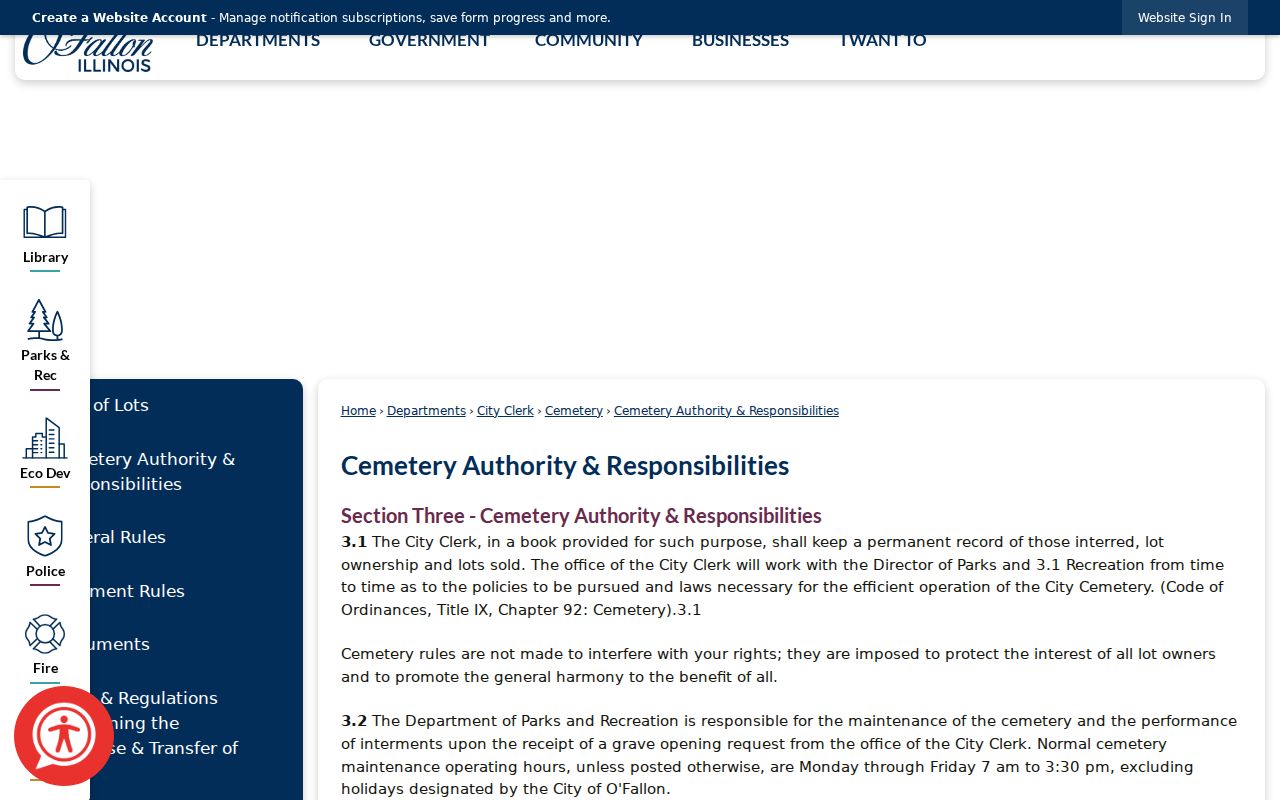
That custodian context helps route a precise request for interment or lot evidence without presenting cemetery data as a modern neighborhood directory.
O'Fallon Neighbor Privacy Limits
Public parcel data does not reveal every renter, child, relative, guest, or other household member. Utility, delivery, DMV, vital, sealed court, and other protected personal data do not become public merely because an address is known. Military discharge records at the Recorder also have special access limits.
Illinois's Address Confidentiality Program lets eligible survivors use a designated address and protects information in specified public records. It is not a general removal tool for every public record, but it is a crucial reason never to infer that a missing name is an error. Use the smallest amount of personal information needed for a lawful purpose.
Lawful use. Learn about an O'Fallon block for civic curiosity, reconnection, or personal safety awareness. Never watch, intimidate, threaten, or harass another person.